What Happens in a Real Debate Round and How to Survive Your First One
November 20, 20268 min read1,891 words
Text: Share a Hot Take Editors
A first-timer's guide to each phase of a judged round.
A real debate round becomes manageable when you understand the job of each phase, from building a case to explaining why it wins. For people with no competitive background, a debate practice platform should offer an opponent, published judging criteria, and a written decision tied to the arguments made. AI opponents and judges let beginners complete that first judged round without joining a club or finding a partner.
What a debate round actually is and why its structure is not arbitrary
A formal debate turns on a motion, also called a resolution, which one side supports and the other opposes. Those sides may be called Proposition and Opposition or given other labels for support and opposition. The names change, but the roles do not. Speakers alternate within a fixed structure, and the judge decides on what was argued in the room.
Constructive speeches build the case, questioning tests it, rebuttals attack and defend it, and closing speeches explain who won and why. A response needs an argument to answer, and a closing comparison needs a record of claims and responses to compare. For a first-timer, this means the next task is predictable even when the opponent’s next argument is not.
The formats a first-timer is most likely to encounter
Lincoln-Douglas, usually shortened to LD, is one-on-one and centers on values and ethics. Its topic cycle is shorter than Policy’s, and its rounds run somewhat shorter. It is a good fit for someone who likes to compete alone. Policy, by contrast, is two-on-two, uses a year-long topic, and demands substantial research. Its approximately 90-minute round contains eight timed speeches and four cross-examination periods, making it the most research-intensive and technically demanding of these common formats.
Public Forum, or PF, includes four-minute constructives and questioning called crossfire. Its closing stages are named Summary and Final Focus. Extemporaneous Debate, or XDB, uses a 30-minute preparation window, two-minute speeches, and one-minute cross-examination periods. The pacing is therefore a major practical difference. A case prepared for an eight-minute Policy constructive cannot simply be delivered unchanged in an XDB speech.
These differences determine how much material a speaker can develop and how preparation works. They do not replace the underlying sequence. Across these formats, the useful orientation remains case-building, questioning, response, and comparison. For a beginner, locating those functions in the schedule is more useful than treating every unfamiliar speech label as a new skill.
What the constructive speech must accomplish and how to build one under pressure
The constructive must give the judge a complete, organized case for your side. Begin by stating the motion and your position, then provide a roadmap naming the arguments that follow. Organization comes before polish in this phase. A judge needs to understand what you claim and why before delivery can make that claim persuasive.
Build each argument through claim, mechanism, and impact. The claim states what you assert, the mechanism explains why it is true, and the impact establishes its significance to the round. WSDC Academy’s preparation guidance assigns minutes five through fifteen of a 30-minute XDB preparation window to building exactly two arguments in these layers. That constraint keeps preparation focused on developing reasons.
The academy’s homework-ban example shows how those layers connect. The claim is that homework penalizes children for their home circumstances. The mechanism is that a child without a quiet room, a laptop, or a parent available to help must complete work without the support others receive. The impact is the school marking that child down for work they had no fair chance to complete.
Prepare both sides and treat the assigned position as a tactical constraint. Timing then determines how much of the case can be scripted. PF’s four-minute constructives can be prepared nearly in full during preparation, while Policy’s eight-minute constructives rely on carded evidence prepared in advance. In either case, a developed argument is more useful than an assertion whose explanation never arrives.
Cross-examination: what it is for and how not to freeze when the questions start
The questioner seeks weaknesses, clarifies claims for the next rebuttal, and aims for a specific concession. Ask a short question grounded in something the opponent actually said. Do not turn that question into a speech. Winning the exchange outright is less useful than establishing a clear point that can be used in the next argument.
For the responder, the corresponding discipline is concision. Answer the question asked without giving away more ground than it requires. Do not turn a yes-or-no question into an unsolicited explanation. A short answer keeps the exchange close to the question, while a long defense can give the questioner more claims to challenge.
Policy has three-minute cross-examination periods after each constructive, while XDB allows one minute for each questioning period. XDB protects speech time from interruptions, making cross-examination the place for live exchange. PF instead uses crossfire between first speakers, then second speakers, followed by grand crossfire involving all four debaters before Final Focus.
Rebuttals: how to attack what was actually said rather than what you prepared to hear
An opponent may use a different mechanism from the one you anticipated, qualify a claim, or challenge the premise your prepared response assumes. The familiar response may suddenly be the wrong one. Giving it anyway leaves the opponent’s actual argument unanswered, however well the speech flows.
To avoid that mismatch, keep a flow, which is a record of arguments and responses through the round. A basic chart with one column per speech is enough to begin. Record the opponent’s claim and the reason supporting it, then track the answers. Without that record, you have to recall what was said under pressure during rebuttal. An argument that goes unanswered is dropped, and the judge treats that omission as a concession.
Name the opponent’s argument, explain why it fails, rebuild your own position on that issue, and move on. The failure might lie in the mechanism, an impact that does not follow, or evidence weaker than the speaker claimed. Specificity is more useful than general disagreement. In an XDB two-minute rebuttal, there is room for only two or three points, so prioritize arguments the opponent extended.
Most standard formats do not permit new arguments in rebuttals. Some formats, including British Parliamentary, allow new arguments in earlier speeches, so the speech’s role must be understood within its format. The governing task here is to refute, defend, and compare. Attack the opponent’s strongest surviving points rather than spending the speech on easy objections that cannot determine the result.
Summary and final focus: how the judge decides, and what the last speech must do
In PF, the three-minute Summary narrows the round to the best one or two winning paths, extends the strongest responses, and begins explicit weighing. The two-minute Final Focus builds on those same issues. Neither stage permits new arguments. A closing speech therefore depends on what has already been established and defended.
Weighing explains why your win should outweigh your opponent’s win. Magnitude compares the size of the harms, probability compares the likelihood of the outcomes, and timeframe compares their urgency. Name the criterion. A claim that your outcome is larger does not automatically answer a claim that the opponent’s outcome is more likely. The comparison must explain which distinction should decide this round.
The judge traces each key argument from its original claim through the response and rebuild to what remains standing. The judge then compares the wins on those clashes, using the debaters’ weighing before relying on personal judgment where no comparison was supplied. Winning more arguments does not on its own mean winning that comparison. Without explicit weighing, the decision depends more heavily on instincts that may not favor your side.
For XDB, the academy identifies the constructive’s opening and the final rebuttal’s comparison as especially consequential moments worth scripting in advance. The comparison written in advance must still fit what happened in the round. This is the useful reframe for a first-timer. The closing speech is a decision memo, and its job is to give the judge a defensible reason to choose your side.
What AI judging adds to a round and how to read the decision you receive
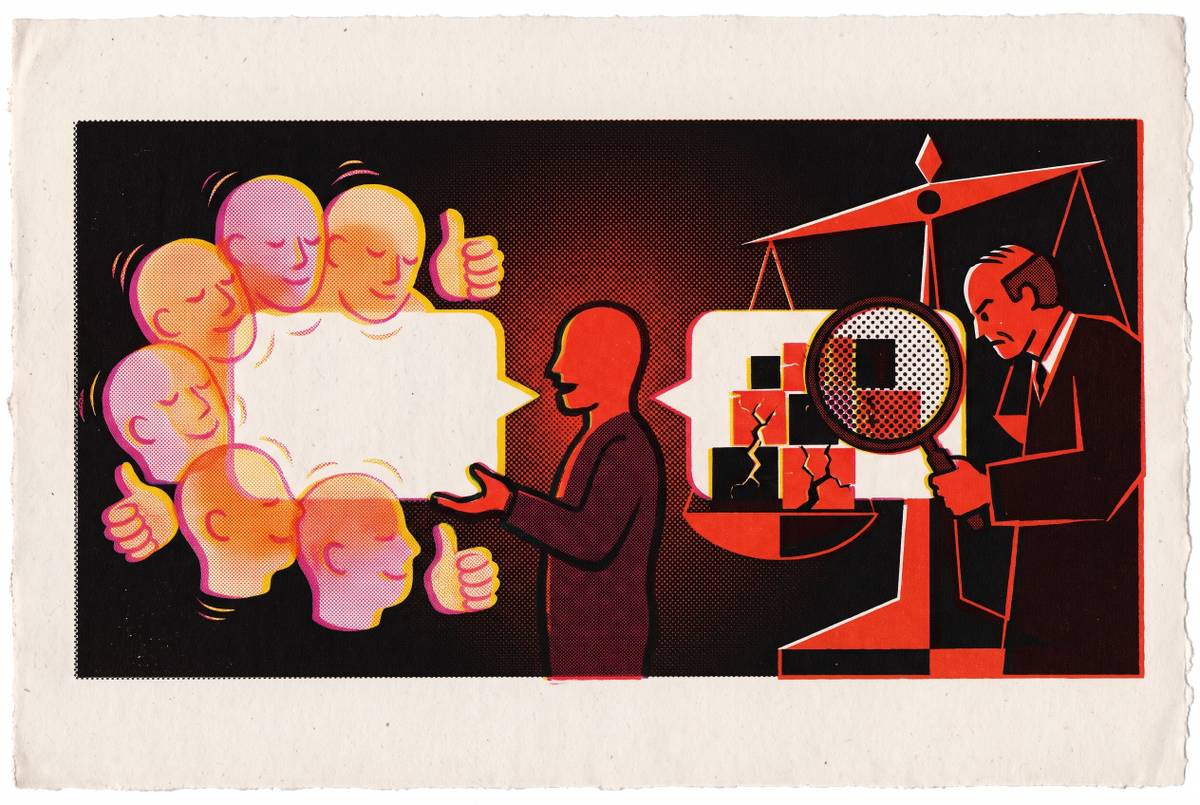
An AI judge can turn the result into an argument-by-argument written decision. That gives a beginner more to work with than a win or loss alone. The useful output includes a score for each side, a breakdown by criterion, and citations of what was actually said. Those details make the reasoning traceable. A generic summary cannot show whether an argument was dropped, successfully rebutted, or given too little weight.
The criteria should be published before the round begins. Logic, response quality, clarity, and persuasion give speakers standards they can use to check the decision. This shifts the intended emphasis toward the arguments. It does not guarantee an unbiased result. A decision without advance criteria is difficult to check or appeal meaningfully, however authoritative its wording sounds.
Bias remains a documented concern in AI judging. Research on how judges behave has found that some models consistently favor the final speaker, whatever the quality of the arguments. That limits what a single verdict can establish. Speaking last and arguing better are different explanations for a win, and a learner needs feedback that does not confuse them.
The safeguards are several independent models, criteria that are made public, and a way to appeal to a human. A panel reduces reliance on one model’s judgment, while transparent rules and appeal make the result more accountable. These safeguards deal with the risk but do not prove it is gone. Treat an individual AI verdict as one data point, and read its explanation against the actual exchange before treating it as a lesson about your debating.
How can you practice before your first tournament without joining a club?
Solo preparation builds coherent arguments, AI sparring surfaces objections and tests a case under pressure, and a live opponent trains listening and real-time response in ways the other modes cannot replicate. A full practice round needs a judge and a verdict. Otherwise, the exchange can make the debater who already feels more confident feel even surer, without showing what actually won.
For someone without a club or partner, an AI opponent paired with an AI judge makes it easy to get through a full round and receive written feedback. The tool’s role should remain clearly bounded. Use it to challenge a case you generated. Answers supplied by a tool can produce performance that fails when the tool is absent. The argument you built is the one you can defend under questioning.
The XDB preparation routine provides a transferable drill for PF and LD as well. Choose an unfamiliar motion and set a 30-minute timer. Define the terms, build two layered arguments, switch sides to stress-test them, then script the opening and closing comparison. Preparing again and again on unfamiliar motions builds the skills the round calls for.
A workable plan for tournament preparation has short drills on how to structure arguments two or three times a week, an AI sparring session, and one full judged round before the event. Short sessions on a regular basis help with that preparation more than a three-hour Sunday marathon. The first step can happen today. Choose the motion, start the preparation timer, and take your own case into a complete judged practice round.