How to Get Your First Judged Debate Rep Without Joining a Team
November 17, 20268 min read1,787 words
Text: Share a Hot Take Editors
A scored, written verdict gives a solo debater a clear next step.
Getting your first judged debate rep without joining a team requires a defensible motion, a timed format, an opponent, and a scored record with written reasoning. An AI opponent removes the need to schedule another person, while the verdict supplies a specific target for the next round.
Why getting a first judged rep feels harder than it is
The first obstacle is a mistaken model of access. Most newcomers think judged debate means a school team, practice rounds, tournament entry, and a judge’s ballot. Under that model, finding a coach or registering with a team appears to come before making an argument. Someone who wants feedback without joining a club can therefore stall before trying a round.
That sequence is no longer the only route. Online judged practice separates the training activity from the institution that traditionally organized it. A participant can get a decision without first finding a human judge who is willing to judge the round. The practical task is instead to identify a format that produces useful feedback and complete it. That requires a clear definition of what counts as a judged rep.
What "judged" actually means and why it changes what counts as practice
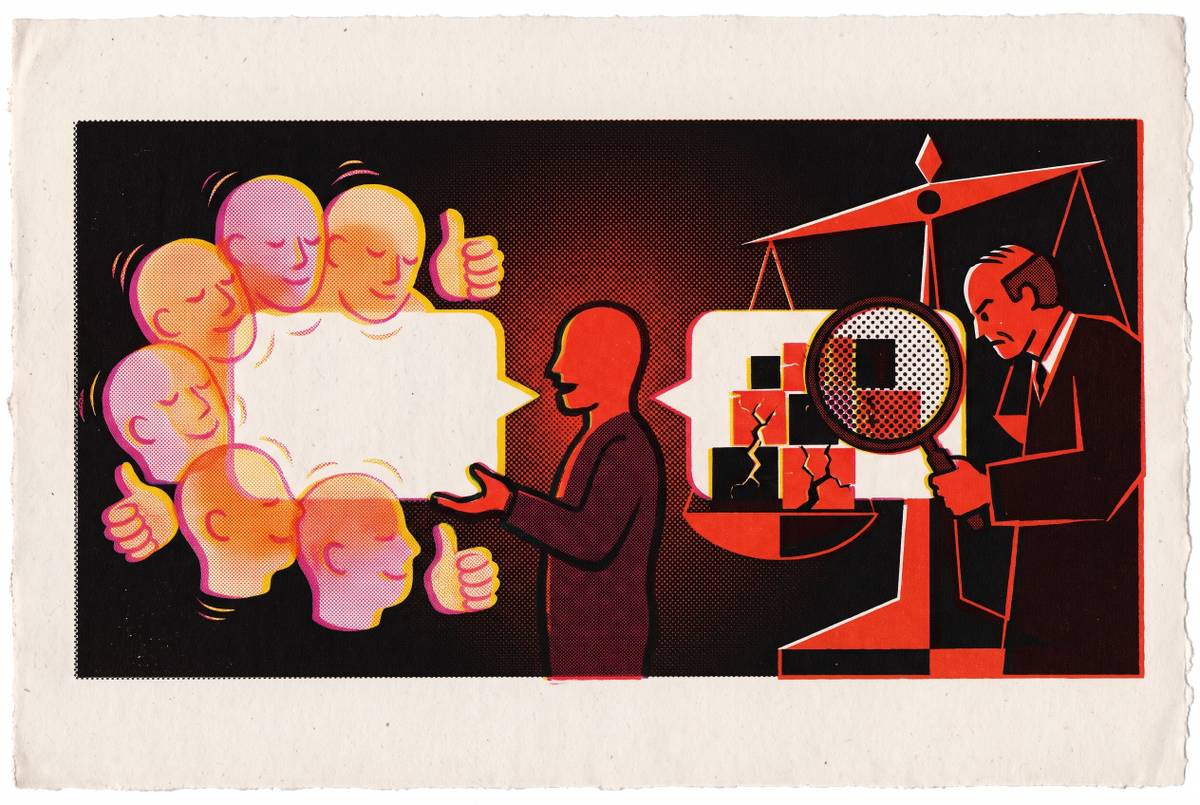
A judged rep is a timed debate assessed against a consistent rubric, with a score, a record, and written reasoning from each judge. An argument or discussion does not necessarily meet that standard. Neither does an exchange that ends with an unexplained winner. The distinction is the feedback mechanism. A completed round must leave enough information to connect the result to particular choices made during the debate.
Scores for logical reasoning, evidence quality, rhetorical effectiveness, and rebuttal strength show how someone did in each part of the round. Weak evidence calls for a different correction from weak rebuttal, even when both contribute to a loss. A win alone cannot reveal that distinction.
The written explanation, commonly called the Reason for Decision, supplies the connection between the scores and the argument. It identifies the deciding issue, cites what was actually said, and can flag structural errors such as ad hominem attacks or straw man arguments. In this respect, debate practice resembles chess training more than classroom discussion. An opponent, a score, and a record turn an exchange into something that can be examined afterward. Rehearsal gets an argument ready, while judged practice tests how it holds up when challenged.
Picking a topic you can actually argue in a first round
The first concrete step is choosing a motion with genuine disagreement. A question with an obvious factual answer gives one side little room to build a case, while a vague value claim leaves both sides without shared ground. “Is the Earth warming?” illustrates the first problem. A first round needs a policy or value question on which reasonable people can defend either side.
The usual wording of a motion helps make the burden of proof clear. “This house would (THW)” signals a proposed change, while “This house believes (THBT)” signals a value claim. Each tells the participants what they must defend before speaking begins. For a first rep, choose a position you personally disagree with and argue that side. This forces you to prepare the strongest case for that position.
Keep preparation to a focused 15-minute framework. Define the motion in one sentence, then define two or three key terms so that the round does not collapse into a dispute about meanings. Scale preparation back from five arguments to two. Each needs a claim, a reason, a concrete example, and an impact that explains why the argument is consequential. Two developed arguments give a rubric that weights logical structure more to assess than five thin assertions.
Choosing the right format for a first judged round
Some formats require prepared briefs, partner coordination, or conventions that take weeks to learn. Those demands can get in the way of building and defending a case. A single motion, timed speeches, and no partner requirement let a newcomer concentrate on argument quality.
For the first rep, start with the shortest self-contained format available on the chosen platform before moving to full British Parliamentary or Policy rounds. This is a way to limit initial complexity. Getting ready to argue a motion, looking back at a live round, and working on spoken rebuttal are different tasks. A platform suited to one need is not automatically suited to all three.
DebateOwl supports preparation for a specific motion. WinDebate serves Policy, Congress, and live-round review, while Debate Ladder offers ranked voice practice. ArguFight supports written debates against people. These uses distinguish the tools more clearly than a general claim that one is best for beginners. For a first judged rep, the relevant question is whether the selected activity also produces the timed, scored, written decision defined above.
Voice and text also train different skills. In written debate, people type their arguments, while live speech calls for delivery, pacing, and real-time rebuttal. A written round gives no practice in those spoken skills. Someone seeking experience in live argumentation therefore has a reason to choose voice, even if text feels more familiar.
Running the first round: AI opponent or human opponent
With the motion and format settled, the next choice is the opponent. An AI opponent removes the scheduling and social friction of finding another person for a first attempt. It still allows a fully scored, on-record round. In the AI-judged setup described here, the judging is the same whether the other side is argued by AI or a human.
The AI opponent is designed to argue back. It tests reasoning by challenging weak points. During a live round, that makes defending the link between a claim and its supporting reason part of the task. The participant has to do more than give prepared arguments. Compared with a human opponent who avoids strong counterarguments, this pressure can produce more useful corrective feedback.
People bring unpredictable arguments, rhetorical variation, and competitive stakes that an AI opponent cannot replicate. After the first rep is logged, a live human round is a natural next step. That progression changes the conditions under which the same core skills are tested.
AI judging nevertheless has a boundary that should remain explicit. It evaluates argumentative performance. A well-structured bad argument can beat a poorly structured correct one because the judge reads the transcript. This limits its use for high-stakes decisions, even while making it useful for practicing structure. A favorable verdict is evidence of performance under the rubric.
Reading the verdict and extracting what to work on next
The written decision is the most useful output of the first round. Read the verdict’s account of victory or defeat for its explanation of argument choices. Begin with the argument the judge weighted most heavily. Ask whether it received a direct answer or went unanswered. That question connects the result to something that can change in the next attempt.
An illustrative verdict might show high clarity but low rebuttal strength. Its written reasoning might name an argument from the other side that went unanswered as the deciding issue. Together, these suggest prioritizing direct responses over polishing the opening speech. The reverse pattern implies a different priority. Strong responses cannot fully compensate for a case whose own claims are hard to follow.
If the verdict identifies a straw man argument, the useful question is whether the response addressed the opponent’s actual claim or a weaker substitute. The cited speech should make that distinction traceable. Without that citation, the label offers little guidance about what to change.
The rubric also helps sequence early improvement. Clarity and relevance have greater weight early in a round, while persuasiveness becomes more important in the final speech. A first-time debater should therefore prioritize clear, on-topic opening arguments before concentrating on rhetorical polish. This gives the next rep a defined purpose. A black-box win or loss cannot support the same process because it provides no argument choice to inspect.
Building a practice habit after the first rep
The second round is easier to start because several uncertainties are gone. The format is familiar, the rubric is known, and the verdict supplies a target. Solo AI rounds make it easier to practice often because there is no opponent to schedule a time with, and they still give full judging output. They provide repeated opportunities to construct and defend arguments under time pressure.
Speech recordings give feedback that is less precise in the written verdict. Listening to a recording lets a speaker hear their pacing, filler words, and drops in energy. These are delivery problems that can occur even when the reasoning is sound.
The strongest objection to relying on AI rounds is their emphasis on structure over truth. Practicing only with AI also leaves out the unpredictable arguments people bring to competitive rounds. The practical response is to use AI for structural drilling and human opponents for competitive calibration. These are complementary roles. Choosing positions you disagree with from time to time adds a test of how well you can build a strong case on less familiar ground.
Once the rubric is familiar, ranked human rounds give the routine a competitive destination. A public leaderboard based on players’ best scores shows how they improve from one session to the next. Where a platform offers creator challenges, leaderboard performance can also put a participant in consideration for a live matchup. An invitation remains a possibility dependent on creator participation, topic and style fit, and availability, even for ranked participants.
What to do if you want a pathway into structured competition after your first rep
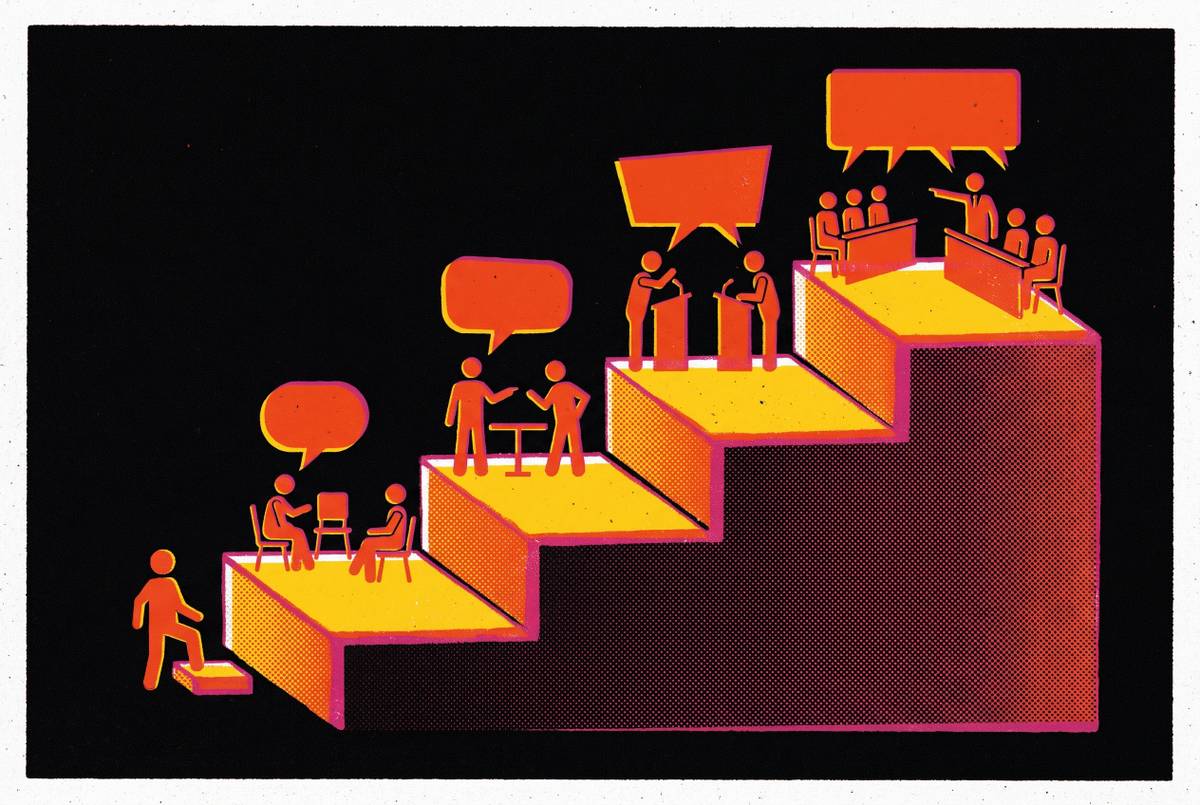
A ranked record can form a foundation for structured competition. It shows format familiarity, a scoring history, and experience arguing both sides, giving a team or program something concrete to assess. It does not require the participant to have started inside that institution. The order can run in the other direction. Independent practice can precede a decision to seek formal instruction or competitive membership.
The American Debate League offers one structured bridge for students. The 501(c)(3) nonprofit, founded in 2014, offers live virtual debate classes for Grades 5–8 on Saturdays via Zoom. Its Fall 2026 sessions ran September 26–November 14. For school programs and coaches, tools that help with live rounds can also support what they already teach through speech capture and attack, defense, and rebuttal drills.
Access should not turn on school resources or team funding. A person with an internet connection and a topic to argue can pursue a scored, on-record round before deciding whether formal competition is the goal. The first verdict gives that decision a practical basis. A school team is one way to get into debate. It is not the gate through which every beginner must pass.