When the Algorithm Assigns You a Side You Disagree With and a Judge Is Already in the Room
November 13, 20268 min read1,700 words
Text: Share a Hot Take Editors
Steelmanning an assigned side turns a forced debate into practice.
A debate practice platform for people with no competitive background should offer live opposition, a published scoring rubric, and written feedback that explains the verdict. That structure makes practice possible without joining a club, but its value depends on doing the argumentative work yourself. Defending an assigned side you reject can build that skill if you make the strongest case for it.
What it actually means to be assigned a side you don't hold, judged before you're ready
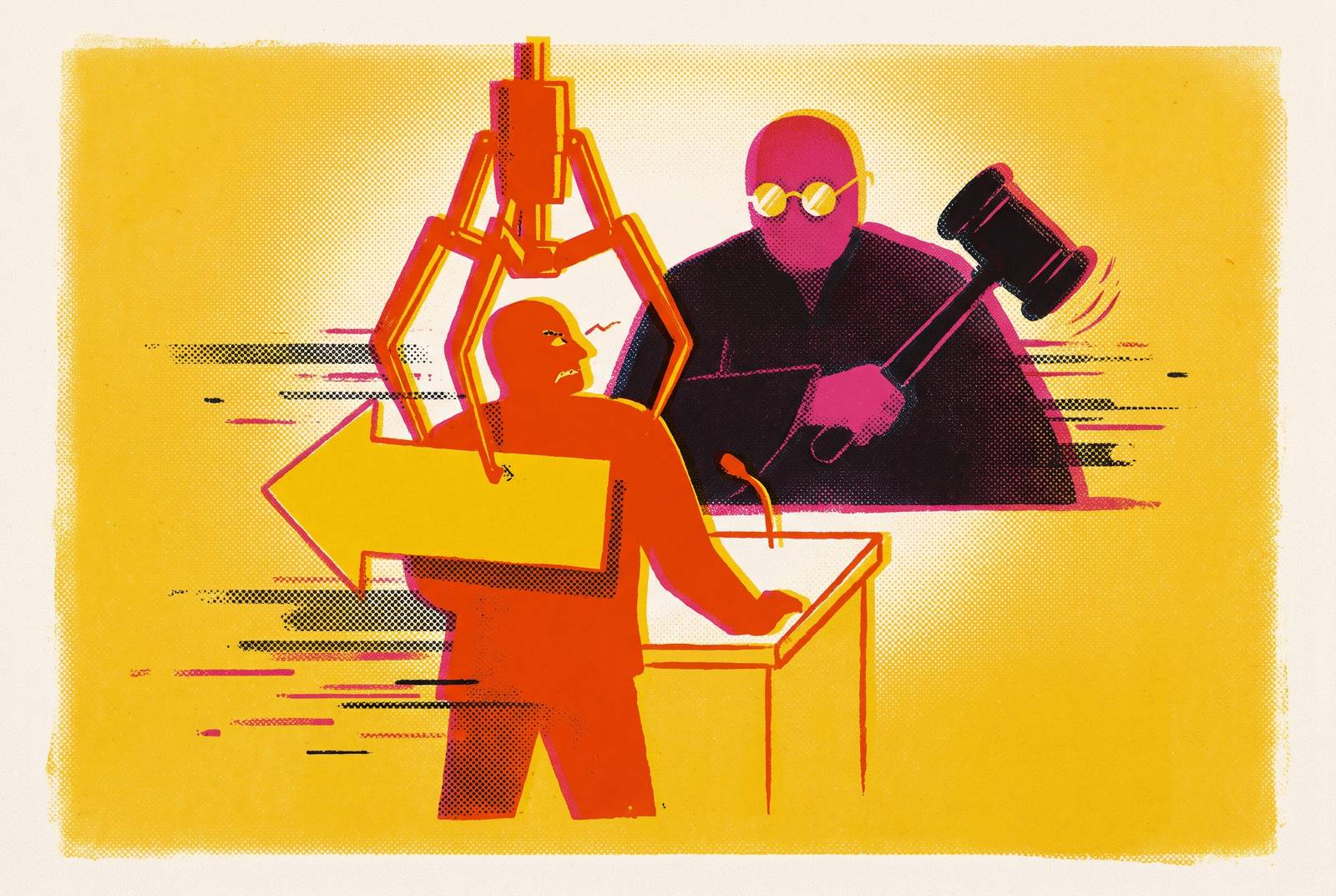
The topic card turns over, or the platform assigns the side, and the position is one you would ordinarily oppose. The judge is already waiting before the debater has worked out an opening. The first task is not to express what you believe, but to construct an argument against it. Meanwhile, the scoring system is running. There is no separate allowance for the time needed to become comfortable with the assignment.
That collision gives the discomfort its particular force. A private conviction now conflicts with a public obligation, and the obligation has a deadline. In a live AI-judged round, the rubric is fixed and the verdict can be seconds away. The debater must suspend the instinct to reject the position long enough to make it defensible. It is a test of whether argument construction can function independently of personal agreement.
Why the adversarial structure of judged debate is designed to surface what a solo rehearsal cannot
A speaker rehearsing alone can deliver a confident claim without encountering the contradiction or missing evidence that would weaken it. In a round, the other side has a reason to expose precisely those weaknesses. The exchange shows the judge which parts of the speech hold up when challenged.
Geoffrey Irving, Paul Christiano, and Dario Amodei’s 2018 paper, AI Safety via Debate, proposed adversarial argument as a way to help a judge assess answers that would otherwise be difficult to check. Finding a flaw can be easier than producing the right answer, and an opponent has an incentive to find it. Opposition performs investigative work that a single presentation can leave undone.
However, that work belongs principally to the speakers. The judge arbitrates the exchange rather than actively verifying every claim or repairing an incomplete case. An unfamiliar assignment therefore exposes any gap between what the debater intends to establish and what the speech actually supports. The burden remains with the speaker throughout. Because the task rewards clear reasoning under challenge more than belief in a conclusion, arguing a side the speaker privately rejects can still be good practice.
What happens cognitively when you argue a position you privately reject
Nemeth et al. (2001) found that devil’s advocacy seemed to favor cognitive bolstering of an initial viewpoint over divergent thought. In practical terms, someone ostensibly arguing the other side may spend the exercise generating further reasons to trust the belief they already hold. The public speech and the private mental task diverge.
This is more consequential than an unconvincing delivery. A weak version of the assigned position can become fresh evidence, in the speaker’s own mind, that the position deserved rejection all along. Every difficulty constructing the case then seems to vindicate the original belief. Completing the round is therefore not, by itself, evidence that the intended learning occurred.
The cognitive load also has a specific source. The debater must hold a private belief in suspension while assembling its opposite under time pressure, with a judge evaluating the result. Unlike a reflective essay, the round calls for answers to challenges right away. The debater still feels the urge to rebut their own speech. Unless the task changes, suppressing that instinct can consume much of the attention available for developing a defensible argument.
AI debate offers a limited parallel. When both sides share a misconception, neither may expose it, allowing an error to pass unchallenged. A human debater who privately agrees with the opponent faces a related risk of leaving the opponent’s strongest claims unanswered. Assigned opposition only works when the reasoning is genuinely opposed.
Steelmanning as the specific practice that converts assigned-side discomfort into skill
Steelmanning changes the task from suppressing disagreement to constructing the strongest available case. Instead of searching for something barely plausible to say, the debater looks for the factual or principled foundation that makes the position worth defending. Personal endorsement is not required.
For a debater facing an unwelcome assignment, the practical sequence begins with that foundation. Identify the strongest factual or principled basis for the side before spending time on arguments that already seem weak. Build the opening around it. This keeps the speech from becoming a list of claims the speaker expects the opponent to defeat. It also directs the exchange toward the position’s actual logical structure.
Do not lead by conceding weaknesses the judge has not yet heard. Establish the case first, then address its limits in rebuttal, where a qualified response can demonstrate intellectual honesty. This sequencing rule still requires genuine support. This gives the assigned position a fair hearing before the debater weighs which of the opposition’s challenges held up.
Repeated practice makes this operation more useful. Each round requires the debater to find a strong foundation rather than react to the least attractive surface version of a view. Over time, that search can become faster, while serious engagement with disagreement becomes less disruptive. The gain is greater facility in identifying what a position depends on and where a substantive challenge must land.
How AI judges actually score a round, and what the debater assigned a difficult side needs to know about that
An AI judge is a scoring system with tendencies. Judge design varies by platform, so findings from one tournament cannot establish how every live practice round will be decided. They can nevertheless identify patterns useful to the assigned-side debater both during the round and when interpreting the decision afterward.
An AI debate tournament found a last-speaker advantage across every judge model in its panel. The final speaker had a substantially higher win rate, although the strength of the preference differed between models. Mistral Small 3 and Claude Opus 4.6 favored the second speaker more strongly than Grok 4.1, which showed the smallest preference. These results illustrate a measurable susceptibility to argument order. They do not establish that the last speaker will win regardless of substance.
The same tournament found that winning sides used fewer words on average than losing sides, with more verbose debaters winning well under half their rounds. That association is especially relevant when an unfamiliar position prompts defensive over-explanation. More words are not necessarily more support. Debaters should close strongly and remain concise when discomfort prompts them to compensate with volume.
Published rubrics provide a different, more dependable form of guidance. A rubric available before the round makes the scoring criteria inspectable, while a written decision allows the debater to examine how those criteria were applied. Bias and wrong verdicts are still possible with transparency. It makes the verdict open to scrutiny. That distinction matters for someone who has never competed, because the result alone says little about which parts of an unfamiliar case worked and which failed.
The known failure modes of AI judging that every debater should be able to name
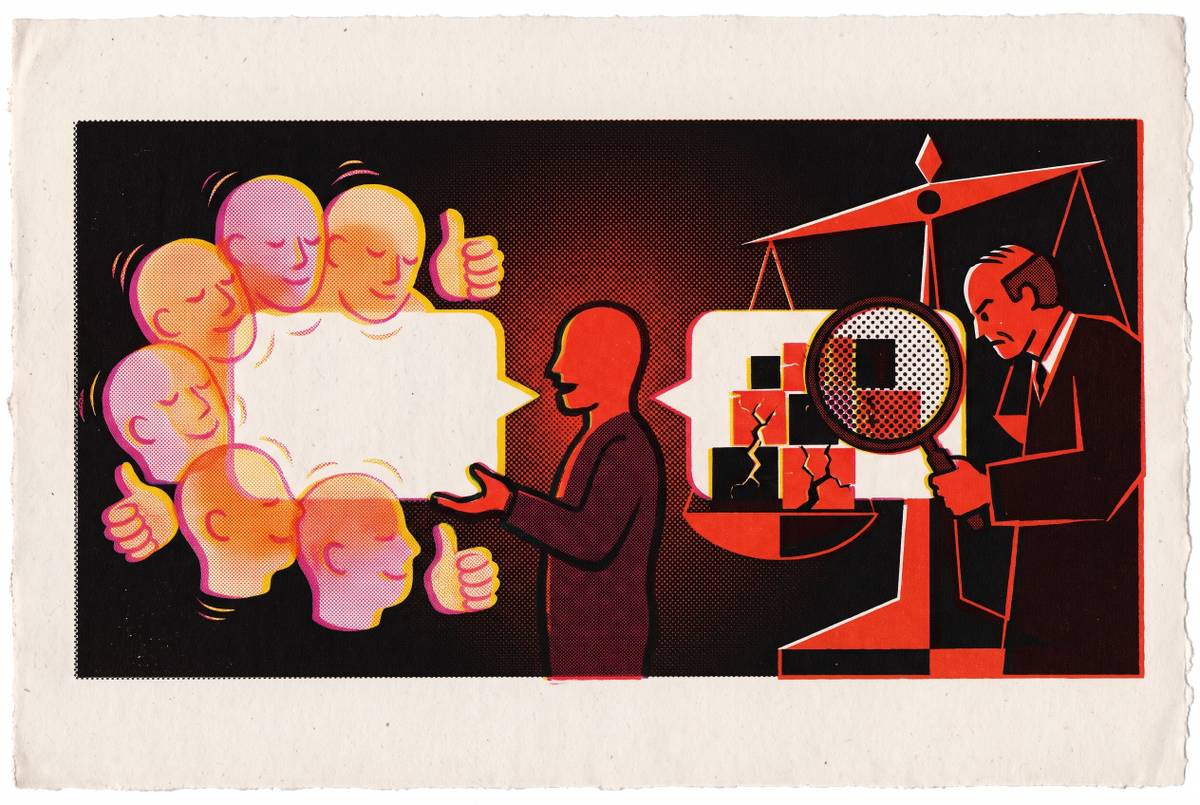
The first failure mode is persuasive style displacing correctness. A confident, fluent argument can win even when its case is weaker, especially in new fields. Sycophancy presents a related risk when a judge rewards agreeable or convincing presentation without testing the argument’s support. A favorable ballot is evidence of how the exchange was evaluated.
This risk does not contradict the tournament finding that verbose debaters won less often. Even if shorter speeches tend to win, style can still mislead a judge in a given round. Length, confidence, and fluency can influence evaluation differently across settings. The distinction is between a tendency and a guarantee.
The second failure mode is an obfuscated argument. A chain of reasoning can contain a wrong step that is difficult to locate within the available exchange. The opponent may recognize that the conclusion is false without being able to expose the precise break. The judge is then left without a clear reason to reject the conclusion. This is especially revealing in assigned-side practice, where unfamiliarity can make locating the faulty step harder than recognizing disagreement with the outcome.
A third failure mode arises from unequal debater strength. A large difference in fluency, speed, or model capability can make the result a poor measure of which position was more defensible. The weaker performance and the weaker proposition are not necessarily the same. The structural answers are published scoring rules, decisions that cite what was actually said, and a path to human review. Transparency, citation, and appeal make these limitations manageable without pretending they disappear.
What the research on debate practice shows about how skill actually transfers
Repeated debate aims to build cognitive flexibility as well as a larger stock of arguments. Building a case, defending it when challenged, and getting a verdict force the speaker to adapt in ways that reciting alone does not. In that respect, chess training provides a useful analogy. The opponent and score impose constraints. Assigned sides add the requirement to reason from a position that does not arrive with the support of personal conviction.
Evidence on AI-assisted practice also supplies a caution. Students given unrestricted AI assistance performed substantially worse on later tasks without it, while students given a tool that prompted them toward answers they had to supply themselves showed no such decline. That finding clarifies the dependency risk, while the effectiveness of assigned-side debate remains unestablished by it. Practice must keep the work that builds the skill, even when a performance could look successful without it.
For a beginner practising without a club, the practical application is repeatable, scored, varied opposition followed by review. It also states that the user picks the motion and side, so that description should not be confused with automatic side assignment. Where a platform does assign sides, the recommended routine is to accept the assignment, steelman before speaking, and review the written decision against the published rubric. The discomfort is useful precisely because the debater, rather than the tool, must construct the unfamiliar case.